
Herring Ball
Clupea harengus
Millions of silver swimmers keep northern seas humming.
Atlantic herring travel in enormous schools that can shimmer across the water. These small fish are a mighty link between plankton and ocean predators.
Find this SeaPal in the card gallery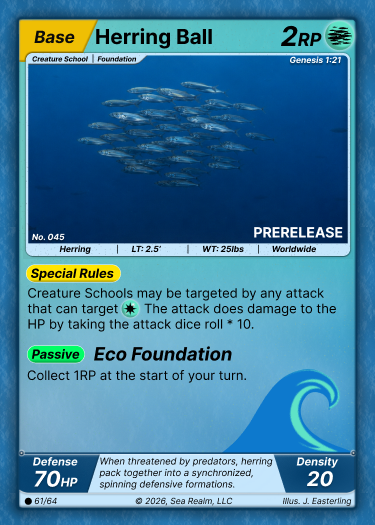
From field guide to game table
Bring this Herring Ball home
See which ready-to-play decks feature this SeaPal. Try one in the simulator before you buy, or explore each full deck list.
- 9 copies
Ready-to-play deck
Open Ocean Deck
Includes 9 cards featuring Herring Ball across 3 card versions.
Quick dive
Creature passport
- Home
- They roam cool North Atlantic coastal and continental-shelf waters.
- Favorite foods
- They eat zooplankton, krill, and drifting fish larvae.
- Size check
- Up to 14 in (36 cm)—a little longer than a ruler
Tell-your-friends facts
Four wonderfully wild things
- 1
A female can release tens of thousands of eggs in one season.
- 2
Herring eggs can carpet rocky or gravelly seafloor in thick patches.
- 3
They may live for about 15 years, surprisingly long for a small fish.
- 4
Whales, sharks, cod, seabirds, and seals all hunt Atlantic herring.
Ocean superpower
Built to be amazing
Coordinated migrations lead whole schools between feeding, spawning, and wintering grounds.
Junior scientist tip
What should I look for?
Look for a blue-green back, silver sides, and a deeply forked tail.
Grown-up research links
We used trusted science organizations to check this profile.