
Blue Tang
Acanthurus coeruleus
A blue reef grazer carrying a hidden tail scalpel.
Atlantic Blue Tangs roam Caribbean reefs, clipping algae from rock and coral in busy groups. A sharp spine beside the tail swings outward for defense like a tiny surgeon's blade.
Find this SeaPal in the card gallery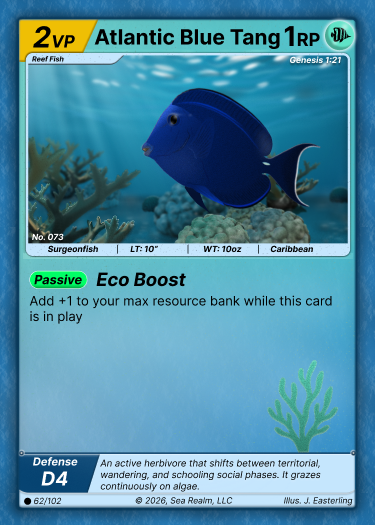
From field guide to game table
Bring this Blue Tang home
See which ready-to-play decks feature this SeaPal. Try one in the simulator before you buy, or explore each full deck list.
Not currently in a ready-to-play deck
You can still find this SeaPal in the card gallery while planning your own custom deck.
Quick dive
Creature passport
- Home
- Western Atlantic coral reefs and rocky shores, especially in the Caribbean.
- Favorite foods
- Mostly algae scraped or nipped from hard reef surfaces.
- Size check
- Up to about 15 in (38 cm) — longer than a ruler
Tell-your-friends facts
Four wonderfully wild things
- 1
Young Atlantic Blue Tangs are bright yellow, not blue.
- 2
Growing juveniles pass through a mixed yellow-and-blue stage.
- 3
Groups sometimes follow grazing parrotfish to reach newly exposed algae.
- 4
Its flattened body slips easily through narrow reef passages.
Ocean superpower
Built to be amazing
A razor-edged tail spine flashes out when danger gets too close.
Junior scientist tip
What should I look for?
Look for an oval blue body and a pale blade beside the tail.
Grown-up research links
We used trusted science organizations to check this profile.